
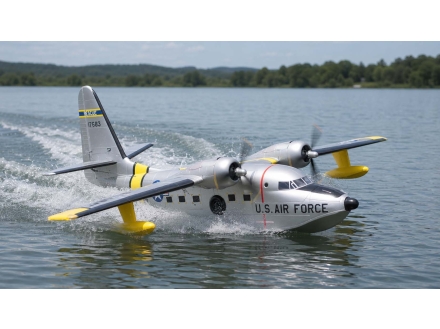
RC seaplane guide • Water takeoff • Water landing
Flying from water is one of the most rewarding parts of the RC hobby, but a flying boat behaves differently before takeoff and after touchdown. This guide explains how to taxi, get onto the step, take off and land on water using the Avios Albatross HU-16 USAF Search & Rescue RC Flying Boat PNF 1620mm as a practical example.
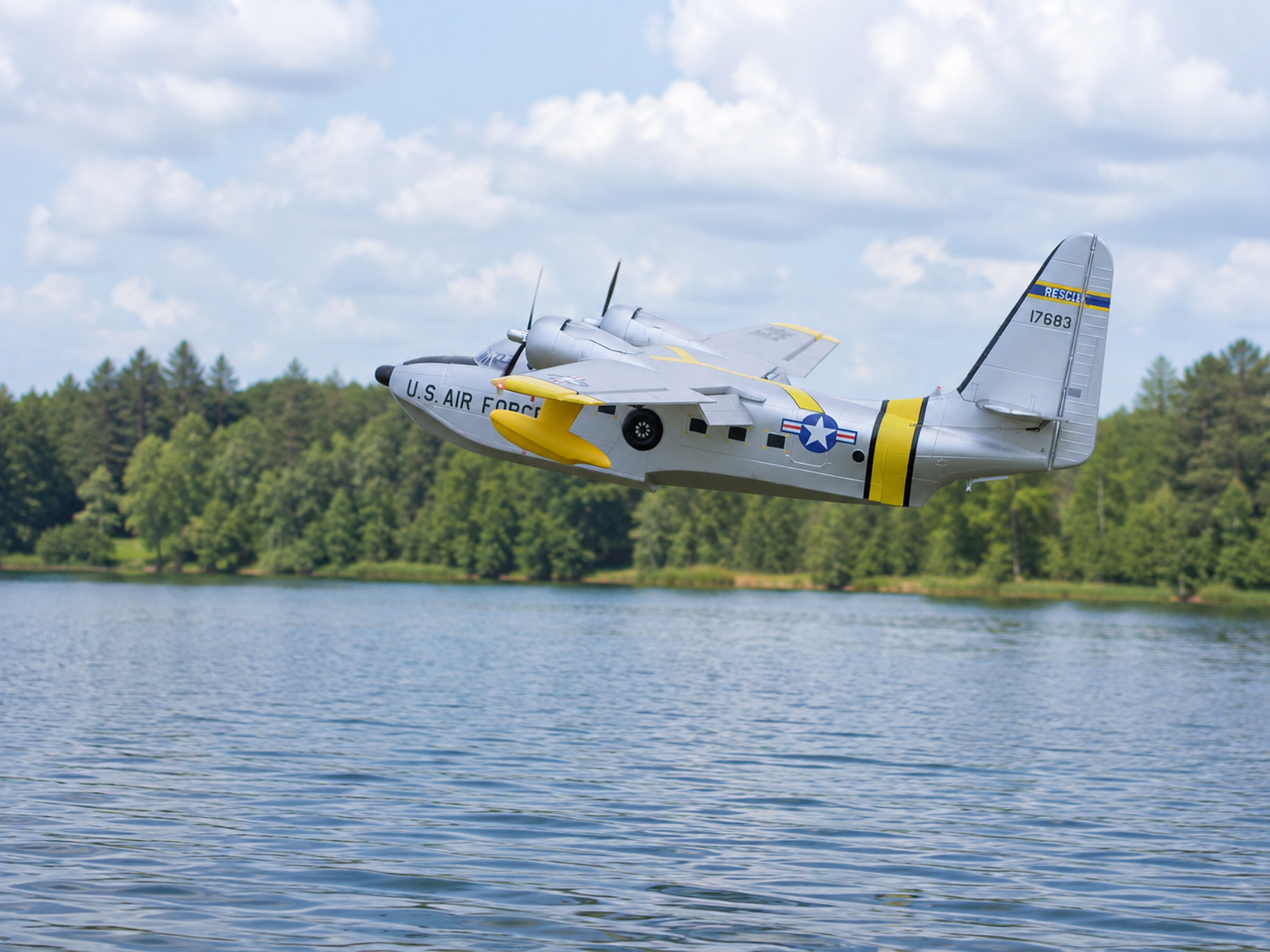
An RC flying boat is not simply an airplane that happens to touch water. During taxi, takeoff and landing, the hull, wingtip floats, wind and water surface all affect the model at the same time. The aim is not to force the airplane into the air. It is to let the hull accelerate cleanly, rise onto its planing step and then transition smoothly from buoyancy to aerodynamic lift.
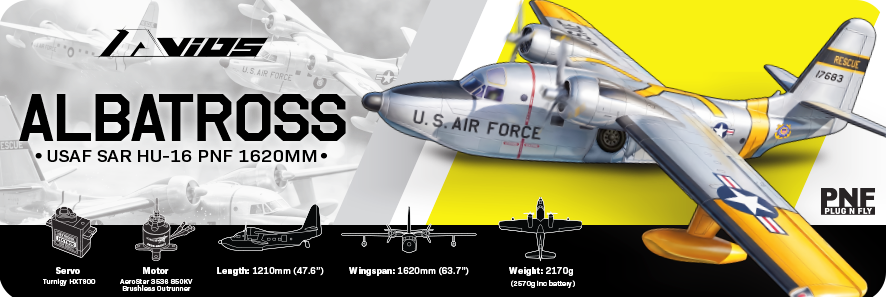
The Avios Albatross HU-16 USAF Search & Rescue RC Flying Boat PNF 1620mm is a useful example because its high-wing layout, water rudder, twin-motor power system, flaps and reversing ESCs give the pilot several tools for controlling the aircraft around the water. This release is distinguished by its USAF Search & Rescue livery; other Albatross releases may use different exterior schemes while retaining the familiar Albatross character.
If you want the model overview, specifications and setup background first, read our Avios Albatross HU-16 USAF Search & Rescue: Setup, Features & First Flight Guide guide.
Before putting your RC flying boat on the water
A good water flight starts before the model leaves the bank. You have fewer options once an aircraft is drifting away from you, so the pre-flight check should include both normal airplane items and water-specific items.
- Check the wind direction. Plan to take off and land generally into wind whenever practical.
- Inspect the water. Calm water or a light ripple is much easier than short, steep chop.
- Check the CG with the flight battery installed. On the Albatross HU-16, use the specified CG range for the model rather than guessing from how it sits on the water.
- Confirm all control directions. Aileron, elevator, rudder, flaps and the water rudder should all move correctly.
- Confirm both motors behave correctly. Test at low power while the aircraft is securely restrained and the propeller area is clear.
- Secure the hatch and battery. The pack must not move during acceleration, landing or taxiing.
- Have a recovery plan. Do not rely on swimming after a disabled model. Use an appropriate safe recovery method for the site.
How to taxi an RC flying boat on water
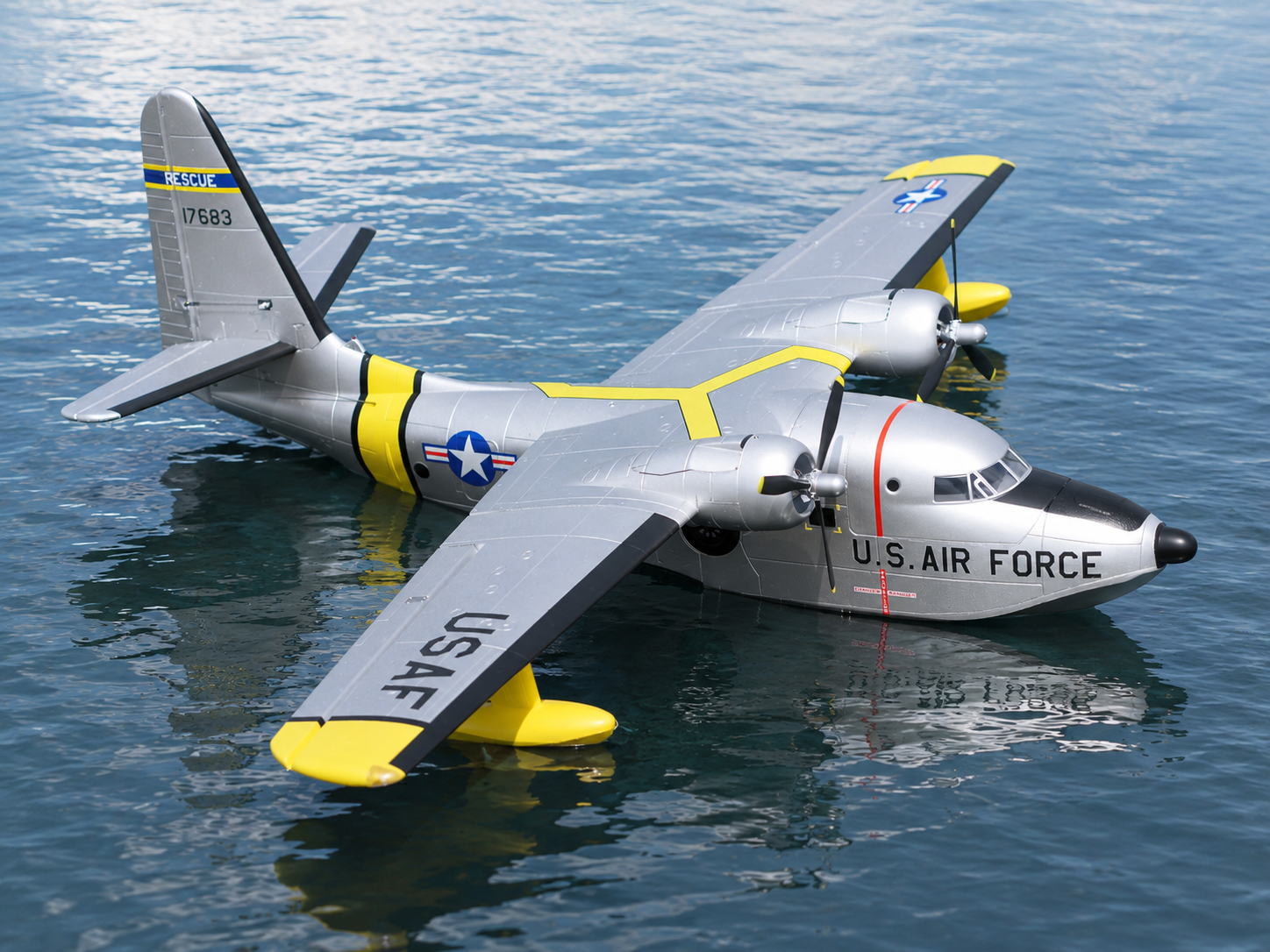
At low speed, an RC seaplane is more boat than airplane. Airflow over the normal rudder is limited, so the water rudder becomes the main steering device. The safest technique is to taxi slowly, make deliberate corrections and avoid sharp high-speed turns that can drag a wingtip float into the water.
Use only enough power to maintain control
Use a small amount of throttle to move away from shore and toward the takeoff area. If the model starts to weathercock into wind, correct early rather than waiting until it has rotated through a large angle. Keep the wings as level as possible with aileron input when the wind starts lifting one side.
Do not confuse taxiing with the takeoff run
Taxi speed should be comfortable and controlled. Once the aircraft is aligned into wind and you have a clear takeoff path, then transition to the takeoff procedure. Trying to make a tight turn while already accelerating on the hull can make a wingtip float dig in and abruptly yaw the model.
How to take off an RC flying boat from water
The Albatross takeoff is easiest when it is treated as a sequence instead of one big throttle-and-elevator input. The goal is to accelerate straight, keep the wings level, let the hull rise onto the step and then allow the airplane to fly off.
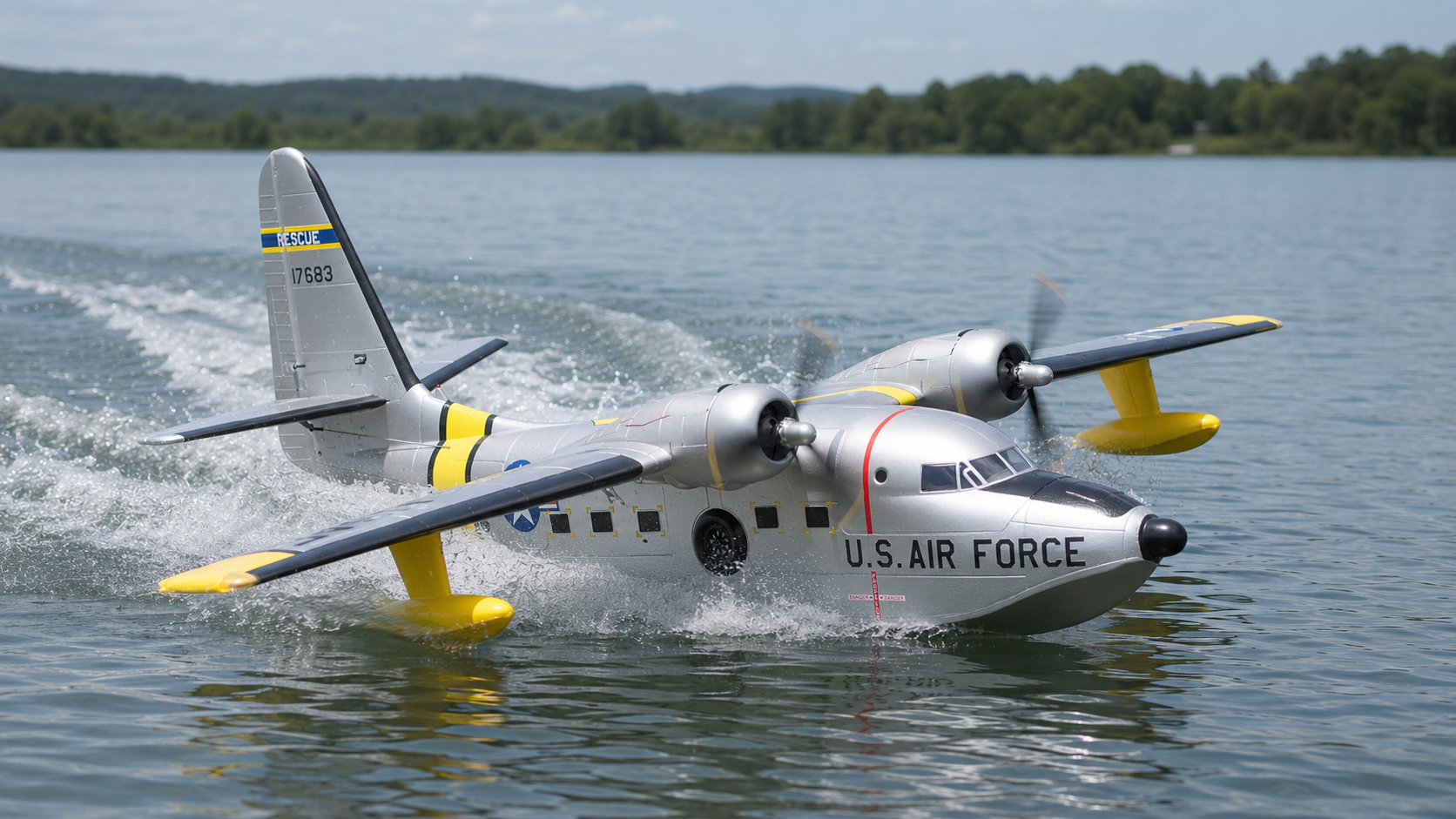
- Line up into wind. Give yourself plenty of clear water ahead and avoid beginning the run while still turning.
- Start with up elevator. This helps the hull attitude as the model begins moving through the water.
- Advance the throttle smoothly. Build speed progressively while using the water rudder/rudder to stay straight and ailerons to keep the wings level.
- Let the hull rise onto the step. As the model begins planing, reduce some of the up-elevator input so it can accelerate efficiently.
- Do not yank it off the water. Once the aircraft has enough speed, use only the elevator required for a clean lift-off and establish a positive climb.
The most important part is patience. A flying boat that is properly on the step needs far less force to leave the water than one that is still pushing a large part of its hull through it.
What does "getting on the step" mean on an RC seaplane?
The step is the break in the lower hull shape that helps a flying boat reduce the amount of hull surface dragging through the water as speed increases. At low speed, the aircraft displaces water like a boat. As it accelerates, the hull rises and begins to plane on a smaller contact area around the step.
For the pilot, the change is easy to recognize: the aircraft stops looking as though it is plowing through the water, the bow attitude settles and acceleration becomes cleaner. This is the point where excessive up elevator can become counterproductive. Reduce the input enough to let the model balance and accelerate, then allow flying speed to do the rest.
Five common RC seaplane water takeoff mistakes
1. Pulling up too early
If you apply too much elevator before the aircraft has enough speed, it can leave the water in a high-drag, low-energy attitude. Let the hull get onto the step first.
2. Applying throttle too abruptly
A smooth power increase gives you time to manage heading and wing level. The more aggressively the aircraft accelerates, the faster a small directional error can turn into a wingtip touching the water.
3. Starting the takeoff run while still turning
Finish the taxi turn, stabilize the heading and then accelerate. A straight takeoff run is much easier to control than a curved one.
4. Ignoring aileron on the water
The ailerons still matter before lift-off. Wind can lift one wing while the opposite wingtip float gets closer to the surface. Use measured aileron input to keep the wings under control.
5. Flying in water that is too rough
Short, steep chop increases impact loads and makes it harder for the hull to accelerate consistently. If the surface looks marginal from shore, waiting for better conditions is usually the better decision.
How to land an RC flying boat on water
A good water landing is a controlled shallow descent followed by a small flare, not a dive toward the surface followed by a large last-second elevator pull. Plan the approach early so the aircraft reaches the water aligned, stable and with enough energy to remain controllable.
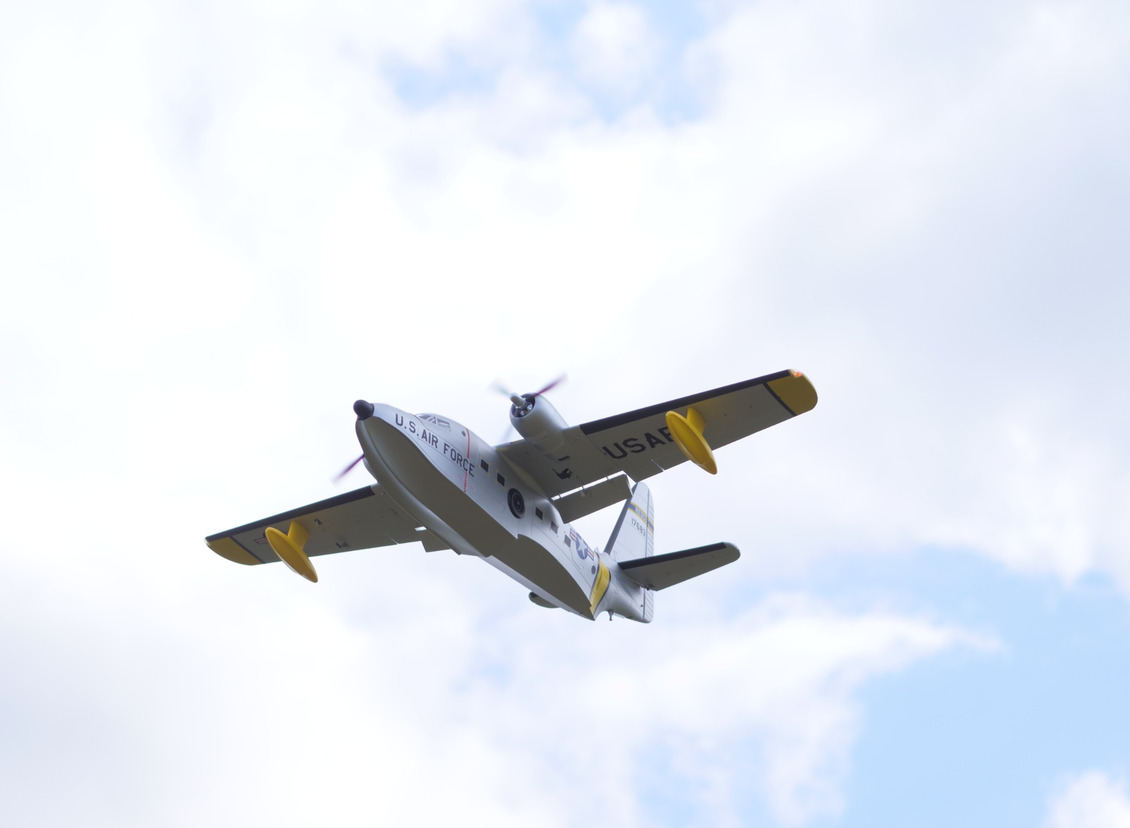
- Approach generally into wind. Establish the final approach with enough distance to make small corrections.
- Use flaps when conditions suit them. Flaps can help reduce approach speed, but they are a tool rather than a requirement for every landing.
- Carry a little power. For the Albatross platform, the published guidance uses roughly 15-20% power to maintain a gentle descent on final. Treat this as a starting reference, not a universal throttle number for every battery, wind or aircraft.
- Round out just above the water. Transition from descent to a shallow, nearly level flight path close to the surface.
- Flare slightly nose-up. Reduce power and let the hull step touch first rather than driving the nose into the water.
- Stay on the controls after touchdown. Keep the wings level and maintain directional control while the model slows back to taxi speed.
Why does an RC seaplane bounce or skip on landing?
A flying boat can skip across the surface if it arrives too fast, too flat or with too much vertical speed. If the first contact launches the aircraft back into the air, avoid chasing the bounce with a large elevator input. Stabilize the model and, if necessary, add enough power to go around and try again.
If bouncing happens repeatedly, check three things before changing control throws:
| Check | What to look for | What to improve |
|---|---|---|
| Approach speed | The model floats a long way or skips immediately after contact. | Set up earlier and reduce excess speed while keeping enough power for control. |
| Touchdown attitude | The hull contacts too flat or the nose touches aggressively. | Use a small, controlled flare so the step touches first in a slightly nose-up attitude. |
| CG | Pitch response feels unusually sensitive or the flare is difficult to judge. | Recheck the model's specified CG with the actual flight battery installed. |
Should you use flaps for water takeoff and landing?
For the Albatross, flaps are most useful for controlling approach speed and descent angle during landing. They are not a substitute for a stable approach, correct CG or energy management. Test flap deployment at altitude before relying on it close to the water, and observe whether the aircraft needs any elevator compensation.
For takeoff, the priority is getting the hull cleanly onto the step and keeping the aircraft straight and level. Use the flap setting recommended for your setup rather than assuming that more flap will always shorten a water takeoff.
Water rudder vs differential thrust vs reverse thrust
These functions are often grouped together, but they solve different problems on an RC flying boat.
| Function | Main purpose | Best used for |
|---|---|---|
| Water rudder | Provides low-speed directional control in the water. | Taxiing, lining up and returning to shore. |
| Differential thrust | Changes left/right motor thrust to help yaw the aircraft. | Tighter water manoeuvring when configured conservatively. |
| Reverse thrust | Produces reverse propeller thrust through the reversing ESCs. | Slowing or repositioning the Albatross after landing and during careful water handling. |
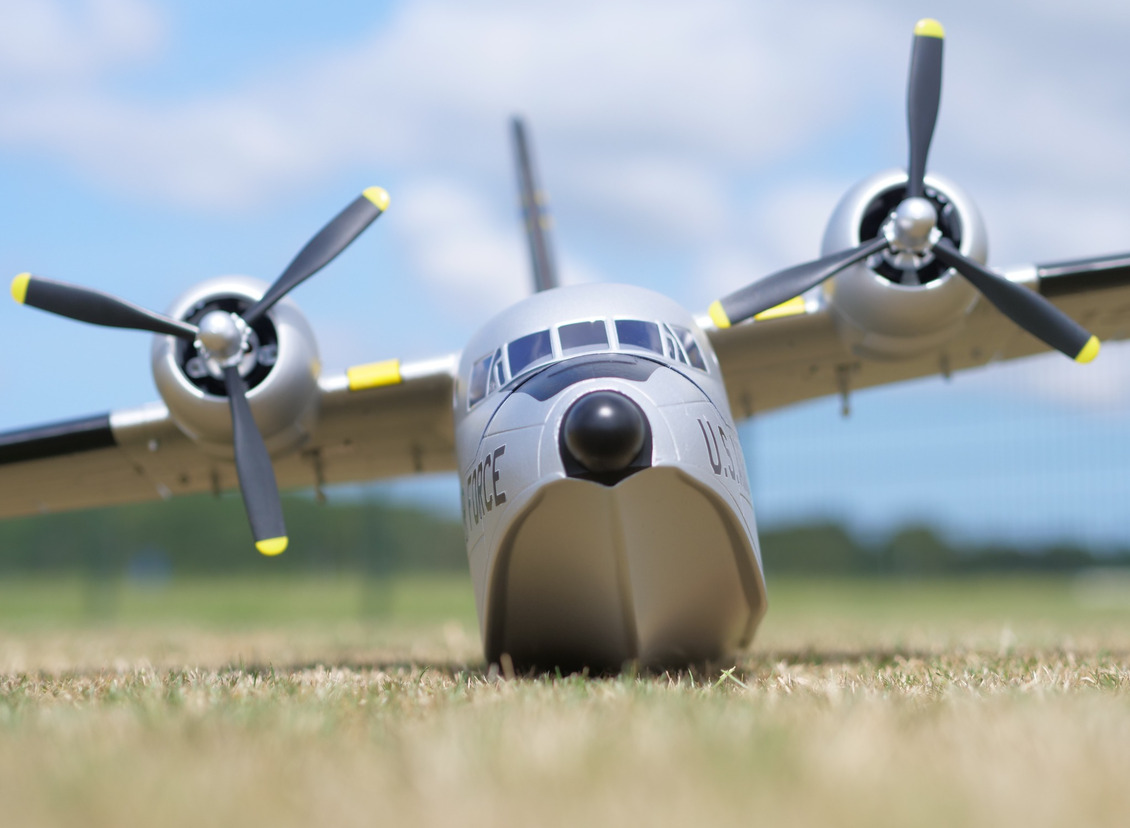
If you use differential thrust, begin with a modest mix and confirm the direction before the aircraft goes on the water. The Albatross platform guidance uses about 15% differential thrust as a conservative starting point. More is not automatically better: overly aggressive mixing can make low-speed handling abrupt.
What water conditions are best for an RC seaplane?
For a first water session, choose calm water or a light, consistent ripple with a gentle breeze. You want enough wind to define an obvious takeoff direction, but not so much that taxiing becomes a constant fight against weathercocking.
Avoid crowded waterways, unpredictable boat wakes, steep chop and shorelines where recovery would be difficult. Large open water is only useful if you also have a practical and safe way to recover the aircraft if the motor, battery or radio system stops working.
First water-flight checklist for the Avios Albatross HU-16
- Flight battery charged and firmly secured.
- CG checked with the actual battery installed.
- Aileron, elevator, rudder, flaps and water rudder moving correctly.
- Both motors operating correctly at low power.
- Radio range and failsafe checked.
- Hatch secured and hull visually inspected.
- Wind direction identified before taxiing out.
- Takeoff and landing areas clear of people, boats and obstacles.
- Recovery method ready before launch.
- First takeoff planned as a smooth, straight run into wind.
After the flight: disconnect the battery, open the hatch, inspect the hull and let any trapped moisture dry before storage. Water operations are much easier on electronics when post-flight drying becomes part of the normal routine.
Watch the Avios Albatross HU-16 on the water
The video below is useful because it shows the Albatross in the environment where the takeoff and landing techniques in this guide actually matter. Watch the hull attitude during acceleration, the model's pace close to the water and how much smoother the aircraft looks when inputs remain measured.
RC flying boat water takeoff and landing FAQs
Should an RC seaplane take off into the wind?
Generally, yes. Taking off into wind reduces the ground or water speed required to reach a given airspeed and usually makes directional control more predictable. Always consider the actual water surface and local site constraints as well.
How do I know when an RC flying boat is on the step?
The hull stops plowing deeply through the water, rides higher and begins accelerating more freely. At that point, reduce excessive up elevator and let the aircraft build clean flying speed.
Do I need full up elevator for the whole water takeoff?
No. Up elevator helps during the early part of the run, but once the hull is on the step the input should be reduced so the aircraft can accelerate efficiently. Holding too much elevator can encourage an early, high-drag lift-off.
What is a water rudder on an RC seaplane?
A water rudder is a small rudder that sits in the water and provides steering when the aircraft is taxiing too slowly for the normal aerodynamic rudder to be fully effective.
Should I use flaps when landing an RC flying boat?
Flaps can help reduce approach speed and are useful on the Albatross when conditions allow, but they are not mandatory for every landing. Test them at altitude first and use a stable approach rather than relying on flap alone.
Why does my RC seaplane bounce on the water?
Common causes include excess approach speed, a flat touchdown, too much vertical speed or an incorrect CG. Aim for a stable shallow approach and a slightly nose-up touchdown with the hull step contacting first.
Can reverse thrust replace the water rudder?
No. Reverse thrust is useful for slowing or repositioning the model after landing, while the water rudder remains the primary low-speed steering tool. Differential thrust can provide additional yaw control if it is configured correctly.


